



When it comes to purchasing a Sierra HD, each engine option offers unique capabilities designed to suit different drivers’ needs. Let’s take a closer look at the key differences between the 6.6L V8 Gas Engine and the 6.6L V8 Duramax Turbo-Diesel Engine to help you decide which one is the best fit for you.
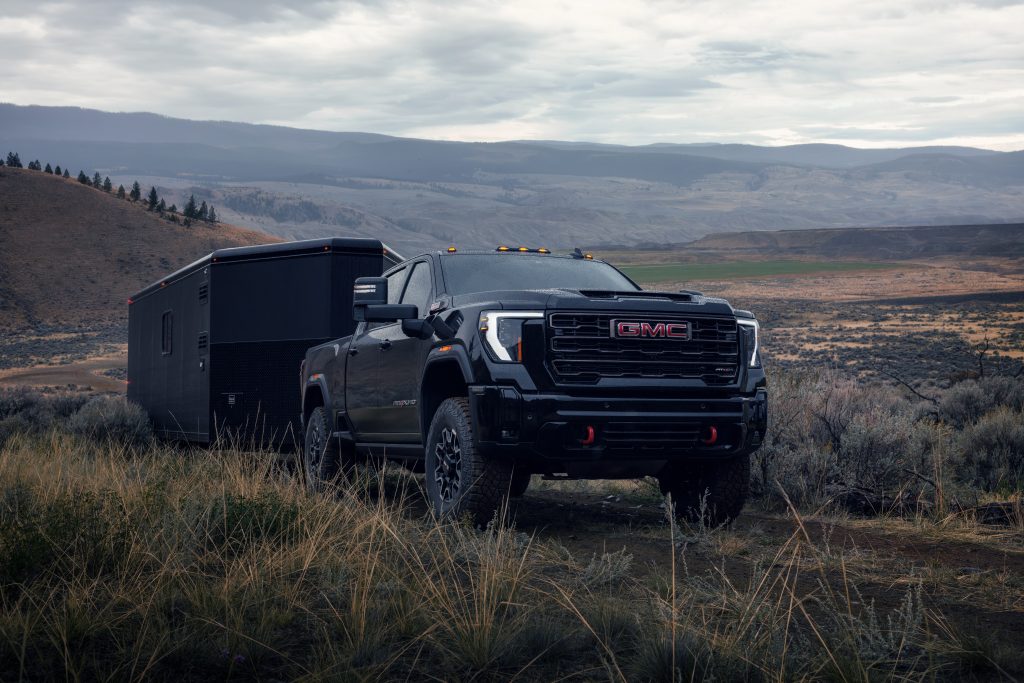
6.6L Gas vs. 6.6L Duramax Turbo-Diesel
The chart below shows a side by side comparison between the two different engine options.
| Type: | 6.6 V-8 | 6.6L V-8 Duramax Turbo-Diesel |
| Fuel Type: | Regular Gasoline (87 Octane) | Ultra-Low Sulfer Diesel and B20 Biodiesel |
| Horsepower: | 401 HP (299kW) @ 5200 RPM* | 470 HP (350 kW) @ 2800 RPM* |
| Torque: | 464 lb-ft (629 Nm) @ 4000 RPM* | 974 lb.-ft. (1,322 Nm) @ 1600 RPM* |
| Emissions Control: | Catalytic Converter, Three-Way Catalyst, Positive Crankcase Ventilation | Cooled Exhast Gas Recirculation, Selective Catalytic Reduction, Diesel Particulate Filter, Intake throttle |
| Displacement: | 6564 CC (400 CI) | 6604 CC (403 CI) |
| Engine Orientation: | Longitudinal | Longitudinal |
| Compression Ratio: | 10.8:1 | 16.0:1 |
| Valve Configuration: | Overhead Valves | Overhead Valves |
| Valves per Cylinder: | Two | Four |
| Valve Lifters: | Hydraulic Roller | Mechanical Roller |
| Firing Order: | 1-8-7-2-6-5-4-3 | 1-2-5-7-8-4-5-6-3 |
| Bore x Stroke: | 103.25 x 98.0 mm | 103 x 99 mm |
| Block: | Cast Iron | Cast Iron |
| Cylinder Head: | Cast Aluminum | Cast Aluminum |
| Intake Manifold: | Composite | Cast Aluminum |
| Exhaust Manifold: | Stainless Steel | Cast Nodular Iron with Steel Pipe Extension |
| Main Bearing Caps: | Cast Nodular | Cast Nodular Iron with Steel Pipe Extension |
| Crankshaft: | Forged Steel | Forged Steel |
| Camshaft: | Billet Steel | Steel |
| Connecting Rod: | Forged Powder Metal | PM Iron |
After looking over the table, you’ll notice that both engines deliver impressive performance, but they’re built for different priorities. The 6.6L V8 Gas Engine offers strong horsepower and smooth, consistent power for everyday driving and lighter towing needs. On the other hand, the 6.6L Duramax Turbo-Diesel stands out with its torque and efficiency—perfect for heavy-duty towing, hauling, and long-distance performance. No matter which you choose, the Sierra HD delivers the strength and dependability you can count on.
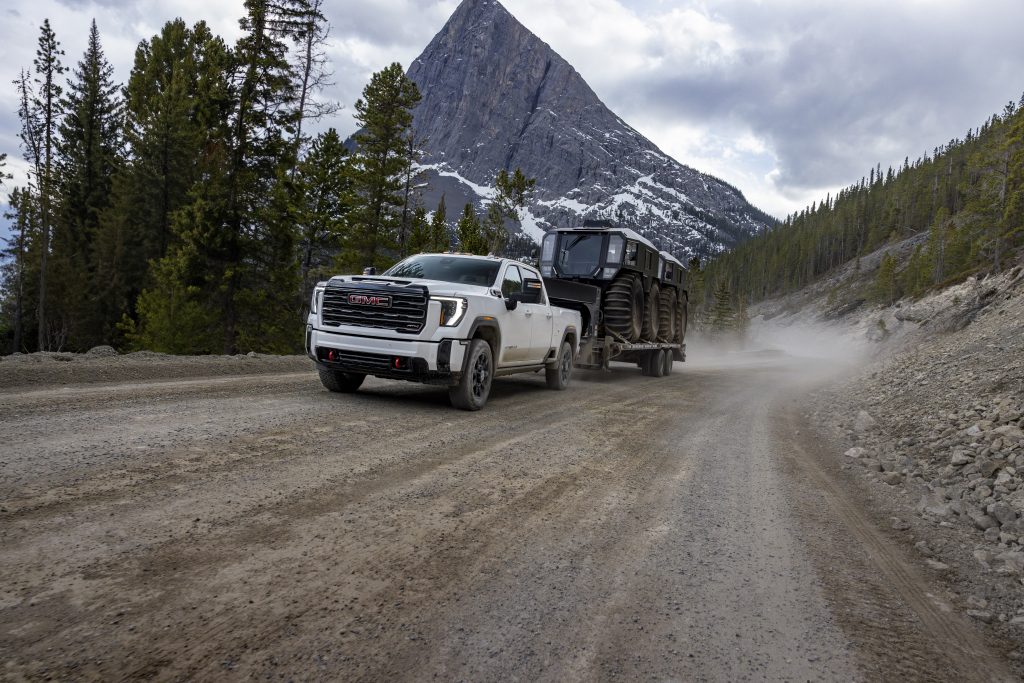
Engine Availability
The standard or availability of these engines changes for the different trims of the Sierra HD. The chart below shows which of the two engines are either standard or available as an upgrade on each of the Sierra HD trims.
| Engine | 6.6L V-8 Gas | 6.6L V-8 Duramax Turbo-Diesel |
| Trim: | ✅ | ✴️ |
| PRO | ✅ | ✴️ |
| SLE | ✅ | ✴️ |
| SLT | ✅ | ✴️ |
| AT4 | ✅ | ✴️ |
| AT4X | ✅ | ✴️ |
| DENALI | ✅ | ✴️ |
| DENALI ULTIMATE | ❌ | ✅ |
✴️ = Available
❌ = Not available
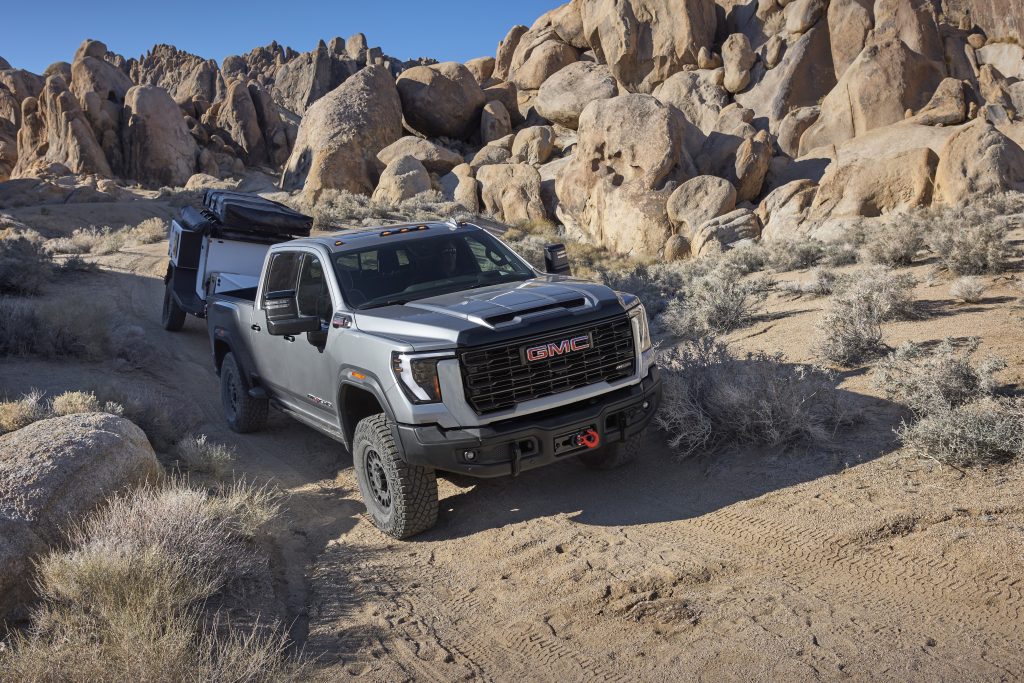
After reviewing the Sierra HD engine comparison and availability charts, we hope you now feel more confident and informed about which engine best fits your driving needs. Whether you value the balanced strength and everyday versatility of the 6.6L V8 Gas Engine or the unmatched towing power of the 6.6L Duramax Turbo-Diesel, both options deliver the dependability that drivers expect from GMC. No matter which engine you choose, your Sierra HD is built to handle the toughest jobs with confidence and capability mile after mile.